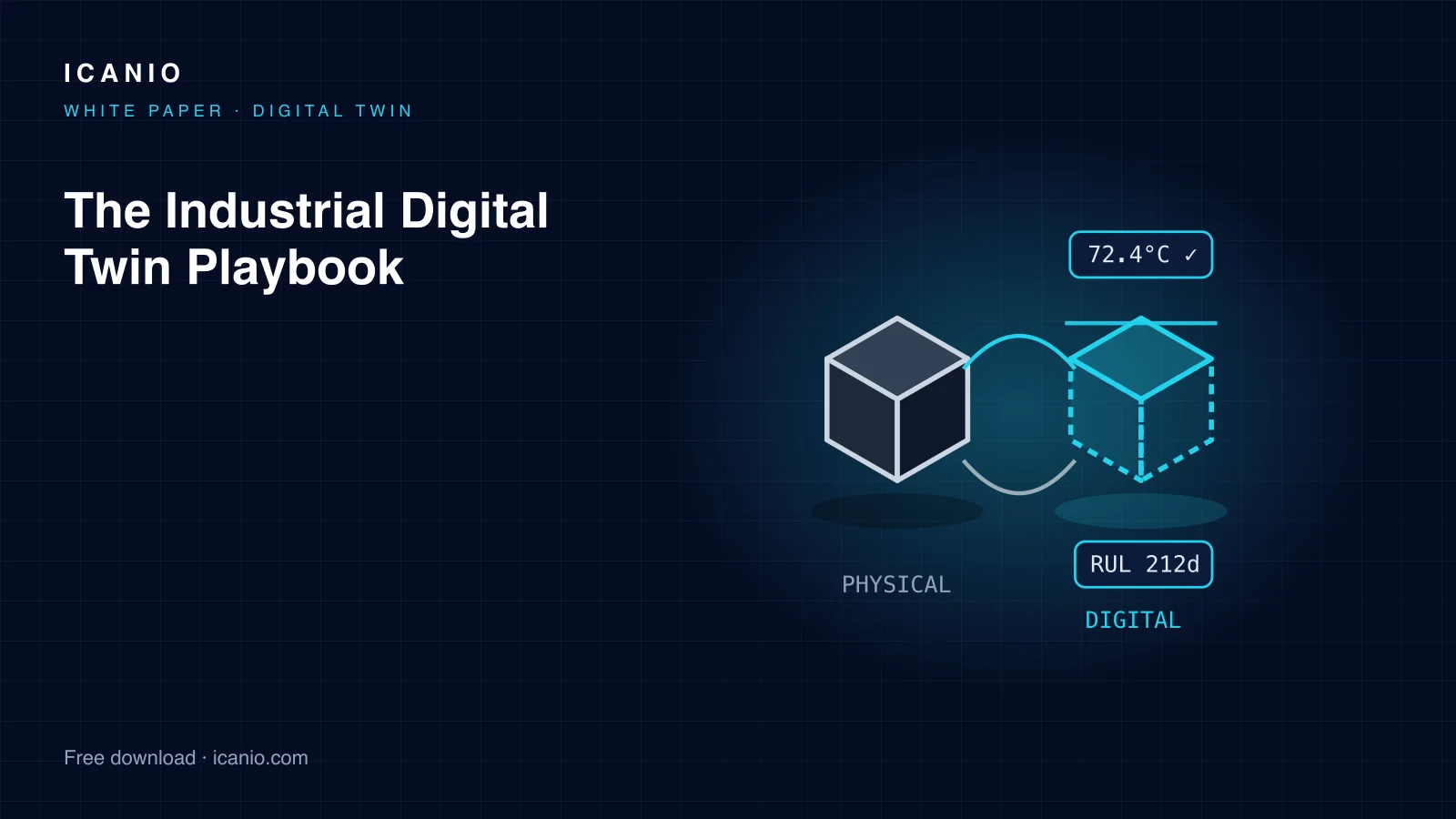
A digital twin in manufacturing is a live model of a machine, line or plant. It is fed by the same PLCs, sensors and historians your engineers already trust. It shows what each asset is doing now and what it will do next.
Most plants already collect this data. The problem is that it sits in separate SCADA screens, MES reports and maintenance spreadsheets. Nobody sees the vibration trend, the scrap spike and the late work order as one story.
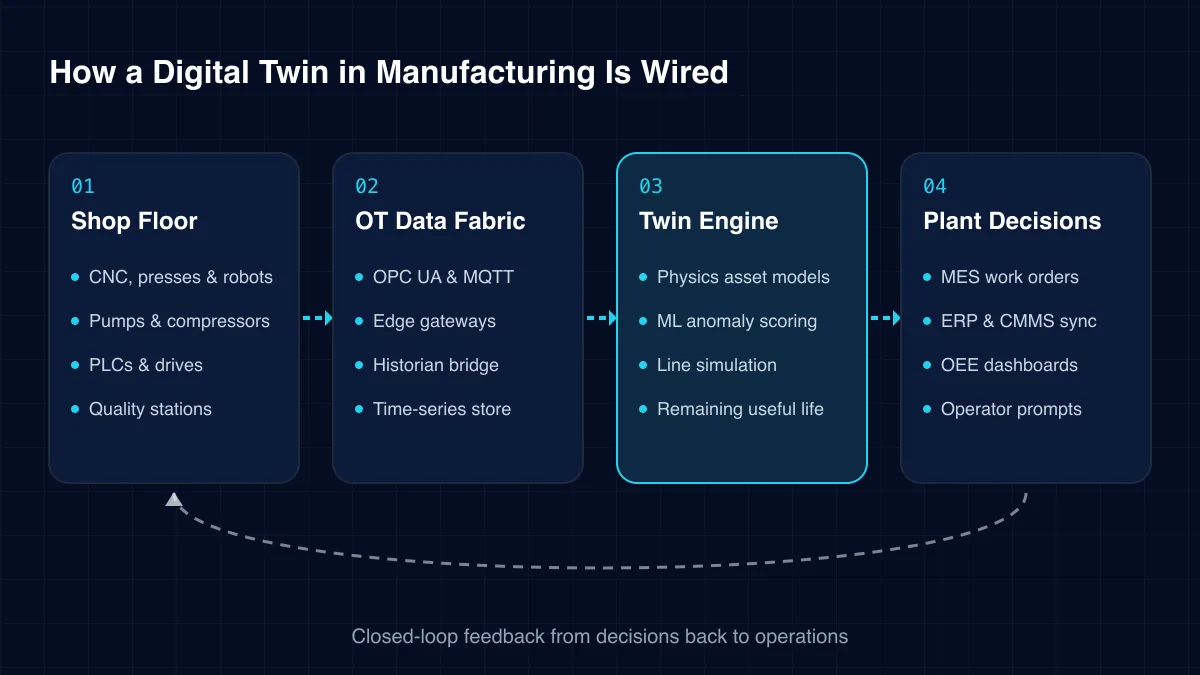
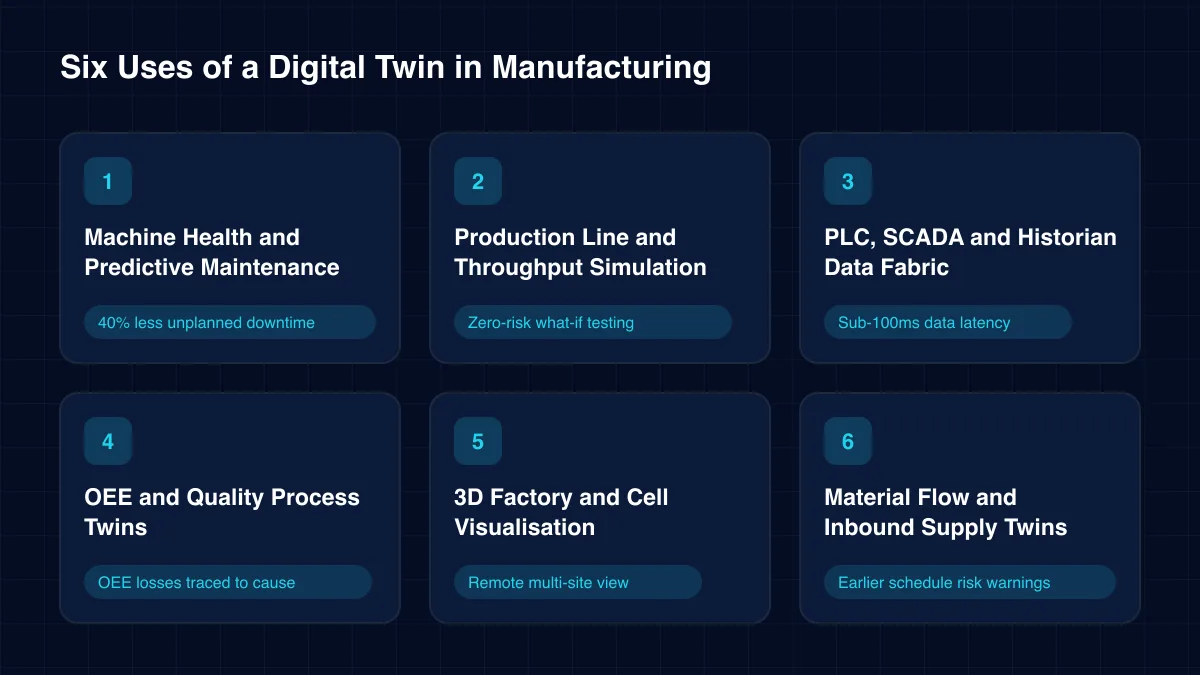
Our team connects those sources into one digital twin in manufacturing, then adds physics models and predictive AI on top. The twin flags developing faults, tests schedule and layout changes safely, and pushes decisions back into MES, ERP and CMMS.
What Is a Digital Twin in Manufacturing?
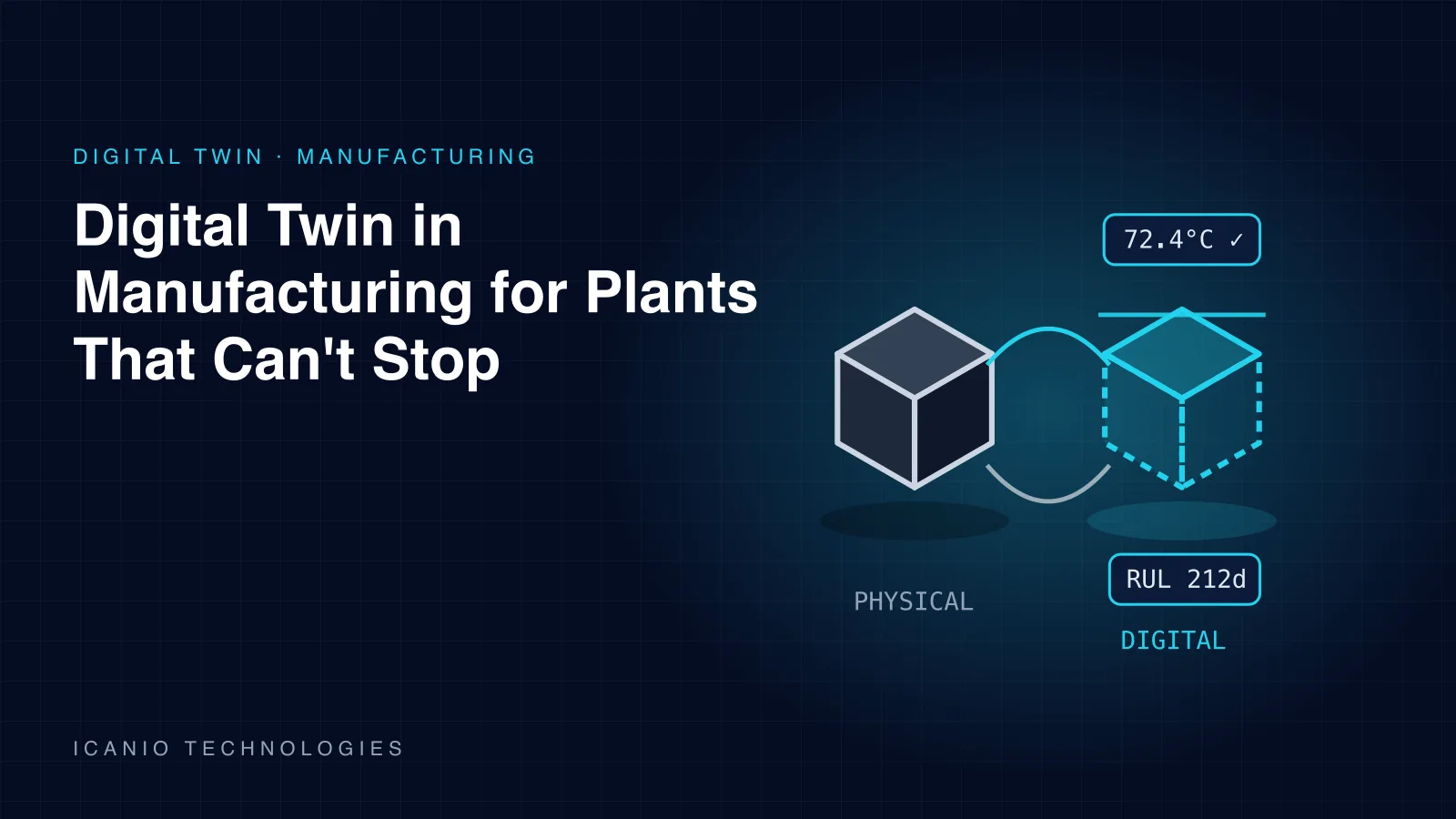
A digital twin in manufacturing is a virtual replica of a physical production asset that stays in sync with it. Sensor readings, machine states and production counts flow in continuously. The model updates itself as the real equipment runs, wears and changes.
That live link is what separates it from a CAD model or a one-off simulation study. A simulation tells you how a line should behave. A twin tells you how your line is behaving today, and why it differs from the design.
In practice, a digital twin in manufacturing sits between the shop floor and the enterprise systems. It reads from PLCs and SCADA at the bottom, and it writes work orders and schedule changes to MES and ERP at the top. The ISA-95 model is a useful map for where each connection belongs.
Plant-floor definition
“A manufacturing digital twin is a continuously updated virtual model of equipment, lines or processes. It combines live OT data with physics and machine learning to predict behaviour and guide decisions on the real plant.”