Manufacturing digital transformation carries a constraint that most IT modernization guides ignore: production lines cannot pause while migrations happen. A bank can take a core system offline for a planned weekend window. A manufacturer that takes its manufacturing execution system offline stops production. That stop ripples into supply commitments, shift schedules and contractual delivery dates. So manufacturing digital transformation needs a different architecture. It must be designed around zero-downtime migration, not planned cutover windows, and around the operational technology that runs the plant floor.
PLCs, SCADA, distributed control systems and MES carry different availability requirements than the enterprise IT systems most modernization frameworks were built for. This guide explains a phased approach to manufacturing digital transformation, the constraints that shape it, and the sequence of decisions that lets each phase deliver value on its own.
Key Takeaways
- Manufacturing digital transformation must keep production running, so it favours phased, parallel approaches over big-bang replacement.
- The safest first step is data access, not application replacement: unlock data from existing systems before touching them.
- OT/IT convergence creates new attack surfaces, so industrial security standards such as IEC 62443 belong in the architecture from day one.
- ERP modernization should start with integration and data quality work, then move to migration.
- Change data capture and shadow running turn the final cutover into a routing change instead of a risky data event.
- Organisational change management decides adoption as much as the technology does.
What Makes Manufacturing Digital Transformation Different
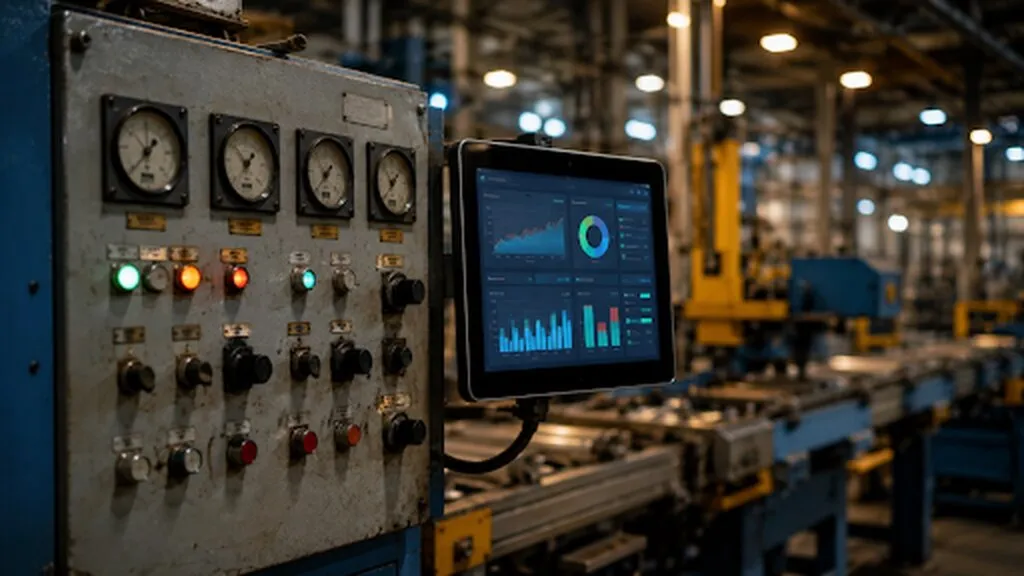
Manufacturing digital transformation involves two technology layers that IT-focused frameworks often treat as one. In manufacturing digital transformation, the enterprise IT layer includes ERP, supply chain software, quality management systems and business intelligence platforms. Manufacturers share these with other industries.
The operational technology (OT) layer includes PLCs, SCADA systems, distributed control systems and manufacturing execution systems. These are specific to the plant. They carry stricter availability, safety and update requirements than office IT.
A program that touches only the IT layer produces better reports. It does not change how production runs. Real manufacturing digital transformation bridges both layers. It improves operational efficiency and business visibility at the same time.
The OT/IT Convergence Challenge
OT systems were historically isolated from enterprise networks. They ran proprietary protocols on separate networks where uptime was the absolute priority. Connecting them to enterprise IT and cloud platforms enables real-time data, IoT analytics and machine learning. It also creates new attack surfaces.
The ISA/IEC 62443 series is the international framework for industrial automation and control system security. NIST also publishes practical guidance in SP 800-82 Rev. 3, its guide to OT security. Our team recommends treating these as first-class architecture requirements. They should not be a compliance checkbox added after the integration is designed.
This discipline lets a manufacturer capture the gains of OT/IT convergence without accepting uncontrolled exposure. Network segmentation, controlled data diodes or brokers, and strict identity management are the usual building blocks.
Why Big-Bang Replacement Fails on the Plant Floor
The classic replacement model has four steps. Define the target state, build the new system, migrate everything, then retire the old one. It is risky in any industry. In a factory it is especially risky, because the systems being replaced run live production.
A failed weekend cutover in an office system means a delayed report. A failed cutover on a production line can mean scrapped batches, idle crews and missed shipments. That asymmetry is why every manufacturing digital transformation program needs a different playbook.
The Strangler Fig Pattern
The most reliable alternative is the Strangler Fig pattern, described by Martin Fowler and documented in the Microsoft Azure architecture center. The approach is simple to state:
- Build new functionality alongside the existing system.
- Route a small share of work to the new system and observe it.
- Increase that share as confidence builds.
- Retire the legacy component only after the replacement has proven itself in production.
Each step is reversible. For manufacturing digital transformation, that property matters more in a factory than almost anywhere else.
Legacy System Modernization Starts With Data Access
The right entry point for legacy system modernization within manufacturing digital transformation is almost always data access. Application replacement comes later. Legacy systems hold years of production records, quality events and maintenance history. That data has real analytical value. It is often locked in proprietary schemas or flat files that modern tools cannot read directly.
Legacy system modernization that begins with a clean data access layer unlocks this history without touching control systems. Typical tools are APIs, change data capture pipelines and integration middleware. This is core data engineering work, and it delivers visible value in the first phase.
The higher-risk application work then happens later, on a stronger data foundation. Analytics, predictive maintenance models and even a digital twin of a line all depend on this foundation. Without it, every later phase stalls on data quality problems.
Manufacturing Software Modernization: OT Systems First
In manufacturing digital transformation, OT systems need a different sequencing logic than ERP upgrades. PLCs, SCADA and MES carry the highest operational risk if disrupted. They also hold the real-time data that most modernization programs want.
Modernizing these systems rarely means replacing control logic. PLC programs that have run reliably for years contain process knowledge. Recreating and revalidating that logic is expensive and risky.
The usual objective is to wrap modern connectivity around existing OT. That enables data extraction, remote monitoring and enterprise integration. The control logic that governs production stays untouched.
The MES Integration Layer
The manufacturing execution system sits between OT control systems and enterprise IT. It tracks production orders, labour, materials and quality data as production happens. The ANSI/ISA-95 standard defines the model for exchanging this information between plant and business systems.
There are three common paths for an MES:
- Extend a functional MES with modern APIs and reporting.
- Replace an obsolete MES with a modern platform that keeps ISA-95 alignment.
- Build a custom integration layer that unifies several specialised systems into one data platform.
Our team evaluates all three against the client's system landscape before recommending a path. The right choice depends on what the existing MES still does well and where it truly limits the business.
ERP Modernization: Integration Before Migration
ERP modernization is risky because the ERP touches every business function at once. Procurement, production planning, inventory, finance, quality and order management all rely on the same data. A migration that moves everything at once exposes all of them together.
The lower-risk approach to ERP modernization starts with integration. Build clean API connectivity between the existing ERP and the applications that need its data. Establish reliable synchronisation. Validate it in production before any migration starts. Our guide to real-time ERP CRM integration covers the synchronisation patterns in more detail.
Managing the Data Migration Risk
Data migration is often the riskiest part of ERP modernization and of manufacturing digital transformation as a whole. It is also the part that gets the least preparation time. Manufacturing ERPs accumulate years of history with uneven quality. Expect legacy part numbers, discontinued supplier records, obsolete bills of materials and historical cost data with reporting obligations.
Projects that treat source data as ready-to-load often discover mid-project that cleansing and reconciliation are needed. Our team recommends a separate data migration workstream. It should have its own acceptance criteria, validation checks and parallel running period. It should not be a task buried inside the application timeline.
Industrial Software Migration With Zero Downtime
Industrial software migration is the hardest stage of manufacturing digital transformation. On the production floor it needs patterns that most enterprise playbooks skip. The core requirement is that production continues throughout. In complex plants the migration period can span months.
The standard technique is parallel running, also called shadow running. The new system receives the same inputs as the legacy system. It processes them independently. Teams compare outputs before switching any traffic. This builds confidence and keeps a concrete rollback path if the new system behaves unexpectedly in an edge case.
Change Data Capture for Live Systems
Change data capture is the technical foundation of zero-downtime industrial software migration. A CDC pipeline reads every change from the legacy database, usually from its transaction log. It replicates the change to the new system as it happens. The legacy application code does not change.
Because the new system stays continuously updated, there is no big data migration at cutover. The cutover becomes a routing change. If something goes wrong, routing can switch back. Our team designs change data capture pipelines as foundational infrastructure, often on cloud data platforms. They are not a workaround. In manufacturing digital transformation, zero downtime is a design constraint and has to be solved at the architecture level.
The 3 Steps of Manufacturing Digital Transformation
Manufacturing digital transformation programs that deliver value throughout their timeline follow a phased sequence. Each step produces business value on its own. Value does not wait for the end state.
| Step | Focus | Main output | Production risk |
|---|---|---|---|
| 1. Data foundation | APIs, CDC, data platform | Live operational visibility | Very low |
| 2. Integration layer | ERP, QMS, planning links | Automated data flows | Low |
| 3. New capability | AI, planning, selective migration | Predictive maintenance, retired legacy | Managed |
| Ongoing | Security and governance | IEC 62443 aligned controls | Reduces risk |
Step 1: Build the Data Foundation
Step one establishes clean API access to existing systems. It adds a data platform that centralises operational data from OT and IT sources. It also adds analytics that let leaders decide from current data rather than yesterday's spreadsheet. This step of manufacturing digital transformation improves visibility without touching production systems.
Step 2: Connect the Integration Layer
Step two connects the data platform to ERP modernization work, quality management and supply chain planning. Operational data then flows automatically between systems. Manual re-keying disappears. Here manufacturing digital transformation focuses on integration architecture, not replacement. No system is retired yet.
Step 3: Deploy New Capability
Step three introduces new capability. Machine learning models for predictive maintenance can now train on the history collected in step one. Advanced planning tools can use real-time production data from step two. Selective industrial software migration of legacy applications becomes safe, because steps one and two removed the hidden dependencies. Simulation and digital twin solutions also become realistic at this stage.
Why Manufacturing Digital Transformation Fails Organisationally
Manufacturing digital transformation rarely fails for purely technical reasons. Organisational failure is far more common. The people who depend on legacy systems know exactly how they behave. They know the undocumented quirks, the workarounds and the data entry habits that no requirements document captures.
Legacy system modernization that leaves these people out of design and validation often delivers a technically correct system that operators distrust. They resist it and eventually work around it. That outcome wastes the whole investment.
Our team recommends explicit change management phases. Bring process owners, production supervisors and operators into validation before go-live. Do not just train them afterwards. This catches requirements that documentation misses. It also builds the confidence a multi-phase program needs to keep its momentum.
Practical Governance Checklist
- Name a business owner for every system in the manufacturing digital transformation scope.
- Agree measurable acceptance criteria before each phase begins.
- Keep a documented rollback plan for every cutover.
- Review OT security controls at each phase gate.
- Report progress in operational terms, such as downtime avoided or manual steps removed.
How to Measure Manufacturing Digital Transformation Progress
Measure the outcomes each phase was meant to produce. Avoid vanity metrics such as the number of dashboards built. Useful indicators include:
- Share of production data available in near real time.
- Number of manual data transfers removed between systems.
- Unplanned downtime caused by the program itself, which should stay at zero.
- Data quality scores for migrated master data.
- Adoption of new tools by supervisors and operators.
These measures keep manufacturing digital transformation honest. They also give leadership a clear reason to fund the next phase.
Where ICANIO Fits
ICANIO manufacturing digital transformation engagements usually begin with a system landscape assessment. The assessment maps every production and enterprise system, its dependencies, its data flows and the processes that rely on it. Only then do we propose a modernization sequence.
ICANIO brings together data engineering and AI, application development, DevOps and cloud engineering, and support engineering for these programs. You can read how this works in practice in our manufacturing digital transformation case study. Our overview of industrial digital twin solutions shows where step three can lead. For sector context, see our manufacturing industry solutions.
Conclusion
Manufacturing digital transformation succeeds when it respects the plant. Production cannot stop, so the program must run alongside it. Start with data access. Add integration. Only then replace systems, using shadow running and change data capture so cutover is a routing decision.
In manufacturing digital transformation, security and people matter as much as architecture. Align OT connectivity with IEC 62443 and NIST guidance. Involve the operators who know the old systems best.
If you are planning a modernization program and want a second opinion on sequencing, contact ICANIO for a conversation with our engineering team.
References
- ISA/IEC 62443 series of standards
- NIST SP 800-82 Rev. 3: Guide to Operational Technology Security
- NIST: Guide to OT Security publication page
- Martin Fowler: Strangler Fig Application
- Microsoft Azure: Strangler Fig pattern
- Wikipedia: ANSI/ISA-95
Frequently asked questions
Why does manufacturing digital transformation need a phased approach?
Production systems cannot tolerate the downtime that big-bang replacement requires. A phased approach builds new capability alongside existing systems, so the line keeps running. Each phase also delivers value on its own, such as better visibility or fewer manual transfers. Leaders see manufacturing digital transformation results early instead of waiting for a single high-risk go-live at the end of a long program.
What is the Strangler Fig pattern in legacy system modernization?
The Strangler Fig pattern builds new functionality next to an existing legacy system. Work is routed to the new system gradually as confidence grows. The legacy component is retired only after the replacement has proven itself in production. Every step is reversible, which makes the pattern well suited to factories where a failed cutover would halt production.
How does ERP modernization differ in manufacturing?
A manufacturing ERP touches procurement, production planning, inventory, quality, finance and customer orders at the same time. Moving it all at once exposes every function together. The lower-risk route starts with integration, building reliable API connectivity and synchronisation first. Data cleansing then runs as its own workstream before any migration of transactional history begins.
What is change data capture in industrial software migration?
Change data capture reads every change from a legacy database, usually from its transaction log, and replicates it to the new system in near real time. Both systems stay synchronised throughout the migration. Cutover then becomes a routing change rather than a bulk data move. If problems appear, traffic can be routed back to the legacy system quickly.
Where should manufacturing digital transformation start?
Start with data access rather than application replacement. Build clean API or CDC connectivity to existing systems and centralise the data on a modern platform. This unlocks analytics and AI use cases such as predictive maintenance while leaving production systems untouched. It also exposes data quality issues early, before they can derail later migration phases.
How does OT security fit into manufacturing digital transformation?
Manufacturing digital transformation connects OT networks to enterprise IT and cloud services, which creates new attack paths. Security should be designed in from the start, using frameworks such as ISA/IEC 62443 and NIST SP 800-82. Common controls include network segmentation, brokered data flows, strong identity management and monitoring. Reviewing these controls at every phase gate keeps risk in check as connectivity grows.