EHR, HL7 FHIR and DICOM Integration
We connect new apps to the EHR clinicians already use. That means mapping HL7 v2 and FHIR resources, reconciling patient identity and validating DICOM imaging pipelines.
HL7 v2, FHIR, DICOM →Healthcare & Life Sciences
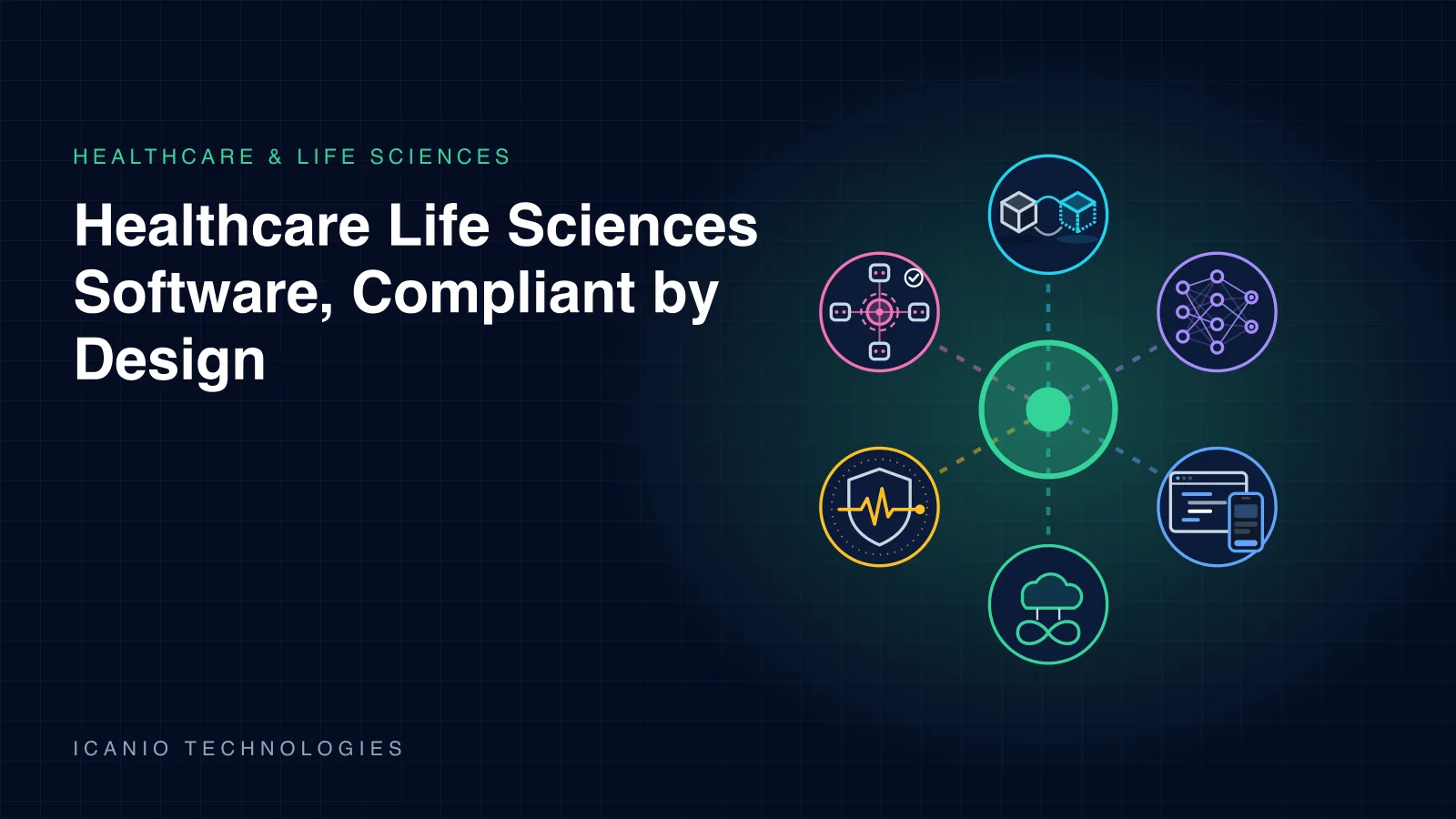
Hospitals, payers, labs and pharma teams need software that clinicians trust and auditors approve. We build EHR integrations, telemedicine, clinical AI and lab platforms with HIPAA and HL7 FHIR designed in from day one.
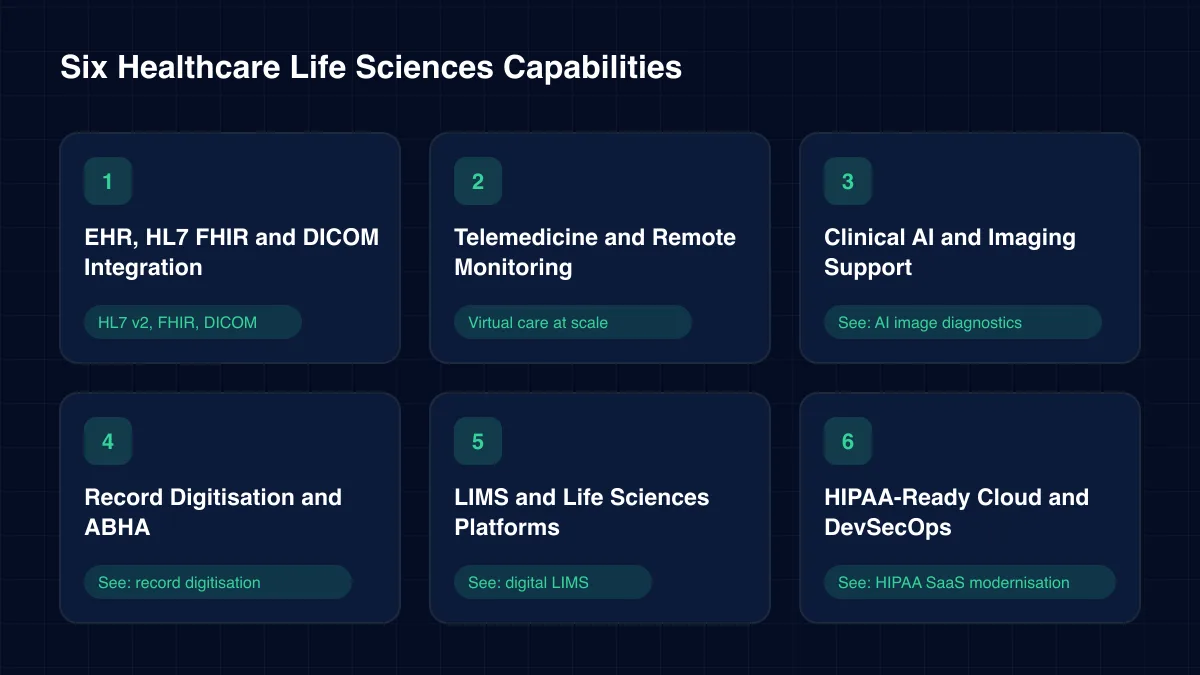
6 ways we build for Healthcare
Digital Twin Solutions
Equipment, Facility and Patient-Flow Twins
Model imaging equipment uptime, ward capacity or patient flow through an emergency department. Test staffing and layout changes before they reach the floor.
Digital Twin for Healthcare →Clinical data is scattered across EHRs, lab systems, imaging archives and paper files. Clinicians lose time hunting for it, and patients repeat their history at every visit. Our healthcare life sciences practice builds software that brings that data together, securely and within the rules.
We work with hospitals, clinic networks, payers, diagnostic labs and pharmaceutical companies. Compliance is an architecture decision for us, not a checklist at the end. Consent boundaries, encryption, audit logs and access control are mapped before any code is written.
This page explains the challenges care and research organisations face, the standards that govern the work, and how each ICANIO service applies to healthcare life sciences teams.
Healthcare life sciences software spans two worlds. On the care side, it supports providers and payers: EHR and EMR systems, patient portals, telemedicine, revenue cycle and population health. On the science side, it supports labs and pharma: LIMS, clinical trial data, research pipelines and connected devices.
Both worlds share the same constraints. Data must move between systems through standards such as HL7 v2, HL7 FHIR and DICOM. Privacy is governed by HIPAA in the US, GDPR in Europe and the Ayushman Bharat Digital Mission (ABDM) in India. Regulated records in pharma fall under FDA 21 CFR Part 11.
Good healthcare life sciences platforms respect those rules without slowing clinicians down. They give the right person the right record, at the moment they need it, and prove who saw what.
Plain-English definition
“Healthcare life sciences software is the set of secure, standards-based systems that capture, exchange and analyse clinical, lab and research data, so care and science teams can act on it safely.”
Foundations
We map data flows, consent and audit needs first. HIPAA controls are designed into the architecture, never retrofitted after launch.
HL7 FHIR, HL7 v2 and DICOM are the default. Interfaces ship with test harnesses, so an EHR upgrade does not break them silently.
AI assists, it never diagnoses alone. Every model output is explainable and needs clinical sign-off before it reaches a record.
Requirements, code, tests and releases are linked. That traceability supports audits and regulated submissions in healthcare life sciences.
Core capabilities
Each healthcare life sciences capability below is delivered by engineers who have shipped production systems for providers, labs and pharma clients.
We connect new apps to the EHR clinicians already use. That means mapping HL7 v2 and FHIR resources, reconciling patient identity and validating DICOM imaging pipelines.
HL7 v2, FHIR, DICOM →Scheduling, secure video visits, e-prescribing and billing in one flow. Device data from wearables, scales and glucometers lands on clinician dashboards with alert thresholds.
Virtual care at scale →Deep learning flags abnormalities in medical images, and language models draft clinical documentation. A clinician reviews every output, with documented model provenance.
See: AI image diagnostics →AI OCR turns paper records into structured data and links them to ABHA health IDs. Doctors reach a full history in seconds instead of searching files.
See: record digitisation →Digital LIMS for sample tracking, QR-verified reports and NABL workflows. Research and trial data pipelines with audit trails for regulated records.
See: digital LIMS →Encrypted, logged and access-controlled cloud platforms with security checks in every release. Pharma compliance SaaS moved from release cycles of weeks to hours.
See: HIPAA SaaS modernisation →Model imaging equipment uptime, ward capacity or patient flow through an emergency department. Test staffing and layout changes before they reach the floor.
Digital Twin for Healthcare →Imaging triage, AI-assisted documentation, medical text verification and population health dashboards, all with a clinician in the loop.
Data & AI for Healthcare →Secure portals, telemedicine apps and clinician tools that read and write through FHIR APIs, so data moves with the patient.
App Development for Healthcare →Encrypted infrastructure as code, audit logging and automated security scans, so compliant releases ship in hours, not weeks.
DevOps & Cloud for Healthcare →Hospitals never close. We monitor interfaces, portals and integrations, and resolve incidents before a ward or clinic notices.
Support Engineering for Healthcare →Agents prepare intake summaries, suggest codes and chase claim denials. Staff review each step, and every action is logged.
AgenticOps for Healthcare →Architecture
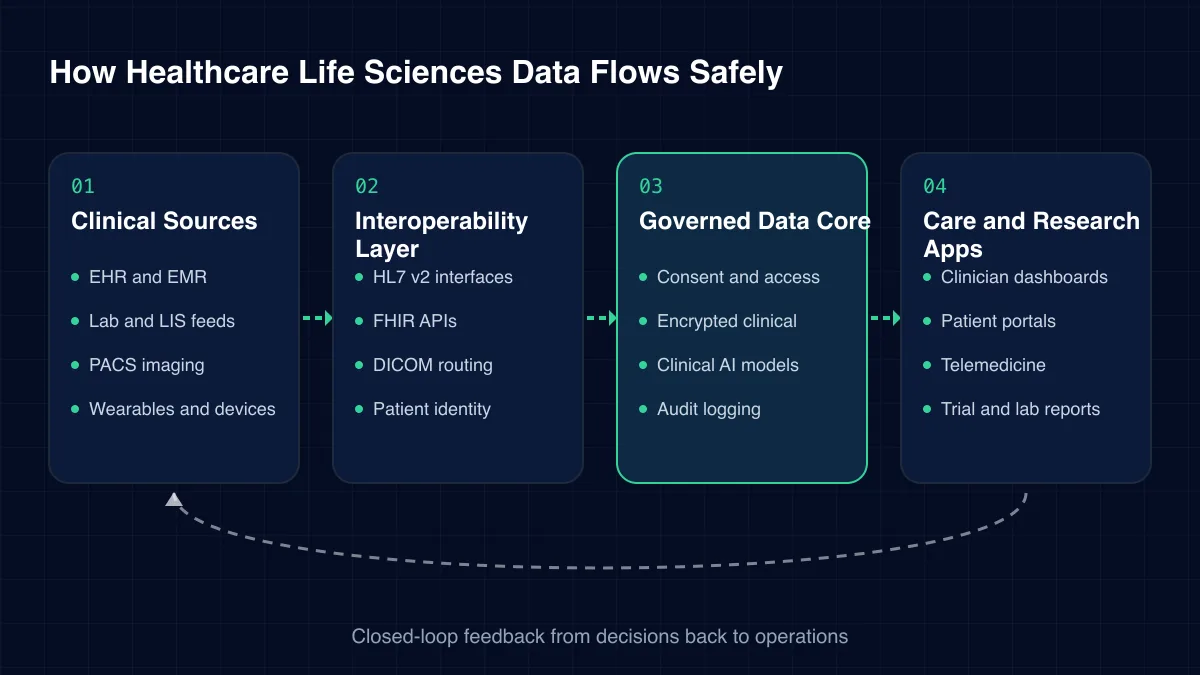
Our builds follow one pattern. Clinical sources feed an integration layer, a governed data core holds the truth, and apps and AI serve care teams with full audit.
01
02
03
04
Challenges we solve
Healthcare life sciences organisations carry heavy regulatory load with limited engineering bandwidth. These are the problems we meet most often.
A patient's data sits in three clinics, one lab and a paper file. Every visit starts with rebuilding the history from scratch.
HIPAA, FHIR and DICOM each demand specialist skill. Internal teams rarely have the bandwidth to get all of them right at once.
Clinicians spend hours typing notes and checking text. That time comes straight out of patient care and adds to burnout.
Video visits, scheduling and notes must work together under load. Many platforms buckle when demand spikes or rural links are slow.
Samples tracked on paper and reports typed by hand slow results and invite transcription errors.
Records, images and claims hold patterns on readmission and care variation. Without pipelines and analytics, nobody sees them.
Healthcare life sciences covers very different organisations. We adapt the approach to four groups.
Many healthcare life sciences projects add compliance at the end. The table shows why designing it in first costs less and ships faster.
| Area | Off-the-shelf | Bolted-on compliance | Compliance by design |
|---|---|---|---|
| Audit logging | Partial | Partial | ✓ Yes |
| FHIR interoperability | Partial | No | ✓ Yes |
| Consent enforcement | No | Partial | ✓ Yes |
| Fits your workflows | No | ✓ Yes | ✓ Yes |
| Clean audit on first try | Partial | No | ✓ Yes |
Returns grow as more departments, clinics and labs join the same governed data layer.
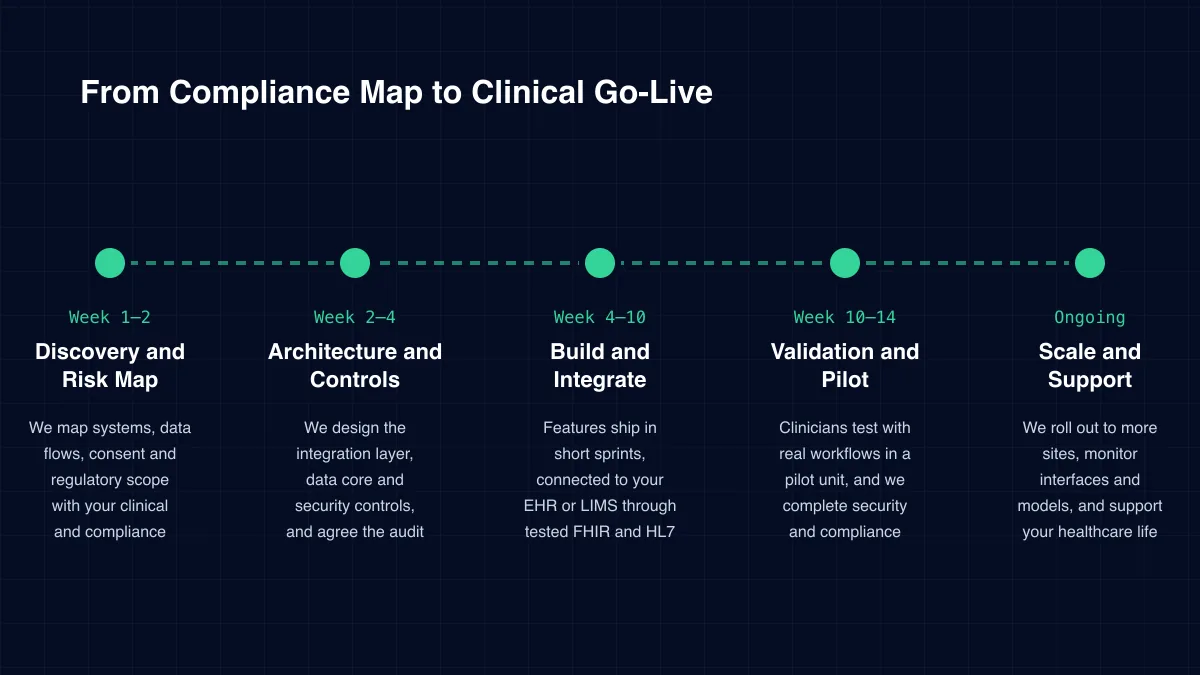
Delivery
Week 1–2
We map systems, data flows, consent and regulatory scope with your clinical and compliance leads.
Week 2–4
We design the integration layer, data core and security controls, and agree the audit approach.
Week 4–10
Features ship in short sprints, connected to your EHR or LIMS through tested FHIR and HL7 interfaces.
Week 10–14
Clinicians test with real workflows in a pilot unit, and we complete security and compliance checks.
Ongoing
We roll out to more sites, monitor interfaces and models, and support your healthcare life sciences teams around the clock.
Case study
Patients faced long waits, fragmented records and limited rural access. Our team built a digital healthcare platform that unifies patient records, telemedicine, EHR integration, billing automation, wearable tracking and AI insights for providers across India. Administrative workload fell by 40%, patient service delivery became 25% faster, and trust and compliance improved by 99%.
“A health record scattered across three clinics is not a history. It is a set of clues a doctor must reassemble at every visit.”Read the full case study →
Records · EHR and EMR integration
One view of records, prescriptions and history across hospitals, labs and clinics.
Video visits · Apple Health, Fitbit, Garmin
Remote consultations plus everyday health data flowing into the patient record.
Claims automation · Preventive AI
Simpler insurance claims and personalised, preventive care plans from patient data.
A healthcare vendor that fails an audit costs far more than its fee. We recommend checking five things before you sign.
In our experience, interface monitoring is what keeps healthcare life sciences systems trusted years after launch.
Every healthcare life sciences engagement starts from a privacy baseline. Data is encrypted at rest and in transit. Access is role-based and least-privilege, and every read and write is logged. We sign business associate agreements where HIPAA applies and choose infrastructure vendors that do the same.
ICANIO operates under ISO 9001 and ISO 27001 certified processes. We also design for GDPR, India's ABDM and ABHA framework, and FDA 21 CFR Part 11 for electronic records in regulated pharma work.
Start with clinician time. Count the hours spent on documentation, record hunting and manual data entry each week. That figure is usually the biggest cost our healthcare life sciences builds remove.
Then add claim denials, lab turnaround time and missed telehealth appointments. We baseline these with your team during discovery and track them after go-live.
Technology stack
We choose tools that meet clinical and regulatory needs. These are the components our healthcare life sciences engineers use most.
Interoperability
HL7 FHIRHL7 v2DICOMInterface engines
Clinical Systems
EHR and EMRPACSLIMSABHA APIs
AI and NLP
Deep learning imagingDeepEval
Apps
Patient portals
Cloud and Security
Encryption and KMSAudit logging
Delivery
CI/CDDevSecOps scansInfrastructure as codeMonitoring
Yes. We work with HL7 v2 interfaces, FHIR APIs and DICOM pipelines to connect new applications to the EHR you already run. That includes patient identity reconciliation and interface mapping that survives vendor upgrades.
We build AI-assisted diagnostic support, not autonomous diagnosis. A qualified clinician always reviews the output. Every deployment includes explainable results, documented training data provenance and a sign-off step before findings reach a record.
A focused module, such as a patient portal or telehealth flow, usually takes a few months from discovery to launch. A full EHR integration or regulated device project takes longer because of validation and documentation.
Yes. Our healthcare life sciences practice supports pharma and research organisations with compliance SaaS, lab systems, research data pipelines and connected device software. We apply the same regulatory-first discipline we use with hospitals.
We design every system to meet HIPAA privacy and security rules. Encryption, access control, audit logging and BAAs are standard. Final compliance also depends on your policies, so we work alongside your compliance team.
Yes. We have built ABHA-ready record digitisation and EHR features for Indian providers. Records link to patient health IDs, so data can be shared within the national digital health framework.
Care and research teams do not need more systems. They need the systems they have to share data safely and quickly. That is the core of modern healthcare life sciences engineering.
ICANIO brings digital twins, data and AI, application development, DevOps, support engineering and AgenticOps to one delivery team. Our team designs compliance in from the first sprint and stays with you long after go-live.
By ICANIO Healthcare Engineering Team · Published · Updated
Book a free 30-minute discovery call with our healthcare life sciences engineers. We will review your systems, data flows and compliance scope, and suggest a safe first step. Contact us today.
Contact Our Healthcare Team