Digital twin technology has become one of the most important innovations driving enterprise AI transformation in 2026. Organisations across manufacturing, energy, logistics, healthcare, and smart infrastructure use AI-powered digital twins to monitor physical systems in real time. They predict failures before they occur. They optimise operational performance through AI-driven insights.
A digital twin is a virtual representation of a physical asset, system, or process. It continuously receives real-time data from sensors, IoT devices, enterprise applications, and operational systems. These virtual models let organisations simulate, analyse, and optimise real-world operations. The result is far more accurate than periodic inspections or static reports.
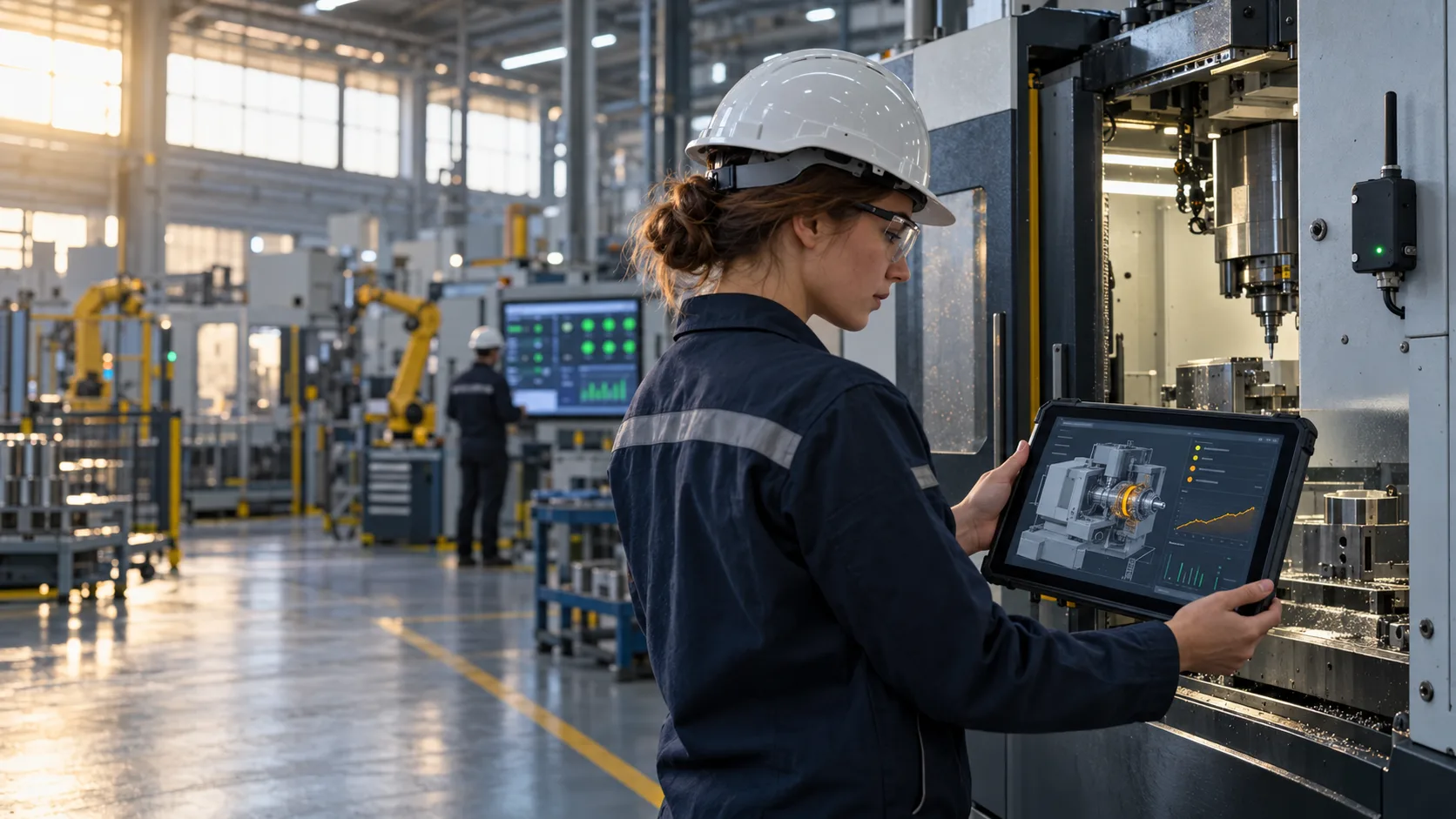
ICANIO's Digital Twin Solutions practice builds digital twin platforms for enterprise clients across the USA, UK, Germany, Australia, and Malaysia. The work combines IoT integration, AI-driven predictive analytics, real-time monitoring infrastructure, and enterprise system connectivity. This piece covers what digital twin technology is and how a modern digital twin architecture is structured. It also explains where real-time monitoring and predictive maintenance deliver the most value, which platforms lead the market, and which challenges to plan for.
Key Takeaways
- Digital twin technology keeps a live virtual model of a physical asset in sync using sensor and operational data.
- A modern digital twin architecture has seven layers, from physical sensors to security and governance.
- Real-time monitoring replaces periodic inspection with continuous visibility.
- Predictive maintenance is usually the primary business case for a first deployment.
- Successful programs start with one high-value asset, then scale on a design built for expansion.
What Is Digital Twin Technology?
Digital twins are dynamic digital replicas of physical systems. They stay synchronised through IoT sensors, AI and machine learning models, real-time telemetry, simulation engines, and cloud and edge computing platforms. The Wikipedia entry on digital twins traces the concept back to product lifecycle management and aerospace engineering.
Unlike static simulations, digital twin technology updates continuously from live operational data. Enterprises can monitor system behaviour, detect anomalies, forecast failures, and optimise processes in real time. None of this interrupts the physical operation itself.
| Dimension | Traditional Simulation | Digital Twin Technology |
|---|---|---|
| Data currency | Static snapshot, updated manually | Synchronised via live IoT feeds |
| Update frequency | Periodic or on demand | Real-time, event-driven |
| Prediction | Scenario modelling only | AI failure forecasting, useful life estimates |
| Integration | Isolated, standalone models | Connected to ERP, MES, CMMS |
| Decision support | Manual interpretation | Automated alerts and recommendations |
Deployments of digital twin technology span manufacturing operations, smart buildings, industrial equipment monitoring, and supply chain management. They also cover energy infrastructure, healthcare systems, and transportation networks. Combining AI with predictive analytics lets enterprises build intelligent operational environments with industrial IoT at their core.
Why Digital Twin Technology Matters Now
Three trends have pushed digital twin technology from research labs into mainstream operations. Sensors have become cheaper and easier to deploy. Cloud platforms now offer managed services for telemetry, time-series storage, and modelling. Machine learning tools have matured enough to turn raw sensor streams into useful predictions. Together, these remove most of the custom engineering that once made digital twins a niche investment.
Digital Twin Architecture: Seven Essential Layers
A modern digital twin architecture combines real-time data collection, AI-driven analytics, cloud orchestration, and enterprise workflow integration. Each of the seven layers serves a distinct function. A gap in any one layer weakens the reliability of the whole platform.
| Layer | Main Role | Typical Components |
|---|---|---|
| 1. Physical and IoT | Generate data | Sensors, PLCs, SCADA |
| 2. Edge | Process locally | Gateways, edge AI |
| 3. Cloud | Ingest and store | Telemetry, time-series |
| 4. Twin platform | Model state | 3D models, simulation |
| 5. AI and analytics | Predict | Anomaly, useful life models |
| 6. Enterprise integration | Act | ERP, MES, CMMS |
| 7. Security and governance | Protect | IAM, RBAC, audit logs |
1. Physical World Layer and Industrial IoT
Every deployment of digital twin technology begins with the physical environment where operational data is generated. Industrial assets such as machines, robots, production lines, vehicles, and energy systems produce sensor data continuously. Industrial IoT devices collect temperature, vibration, pressure, energy consumption, and position data at high frequency. Many plants already run SCADA systems, which are a valuable starting source.
The industrial IoT layer sets the data quality ceiling. A digital twin architecture without adequate sensor coverage will have blind spots that no amount of AI processing can fix. ICANIO's Digital Twin Solutions practice runs industrial IoT coverage assessments for enterprise clients in Germany and Malaysia before architecture design begins. This confirms the sensor layer can support the monitoring and prediction goals the platform must serve.
2. Edge Layer
In digital twin technology, the edge layer processes industrial data close to its source. This reduces latency and improves operational responsiveness. Industrial gateways, PCs, and controllers handle data ingestion, protocol conversion, local processing, and real-time control.
Edge AI inference enables anomaly detection, maintenance alerts, and computer vision at low latency. That matters in manufacturing, where response time can decide whether a failure is caught before damage occurs. Connectivity technologies such as 5G, Wi-Fi 6, OPC UA, MQTT, and Modbus bridge the physical and digital layers.
3. Cloud Layer
The cloud layer is the central data backbone. It manages real-time telemetry ingestion, stream processing, event detection, and time-series storage. This is where data engineering matters most. Clean pipelines, consistent timestamps, and well-defined schemas decide how useful every layer above will be. Our guide to digital twin cloud deployment and GPU infrastructure covers this layer in depth.
4. Digital Twin Platform Layer
The core of any digital twin technology stack maintains 3D industrial models, asset hierarchies, and twin synchronisation. It also handles state and behaviour modelling, plus simulation and what-if analysis. AI-driven industrial environments increasingly rely on GPU clusters and high-performance compute to run these models. Our article on digital twin simulation and sensor data pipelines shows how this layer consumes telemetry.
5. AI and Predictive Analytics Layer
Artificial intelligence is what makes digital twin technology predictive. It powers predictive reasoning and operational optimisation across the digital twin architecture. AI models handle remaining useful life estimation, anomaly detection, failure forecasting, and optimisation. Modern industrial AI platforms include machine learning pipelines, time-series analytics, and deep learning systems. Some add generative AI so operators can query operational data in natural language.
6. Enterprise Integration Layer
The enterprise layer connects digital twin technology with business systems. It provides monitoring dashboards, KPI analytics, 3D visualisation, and alerts. Digital twin systems link with ERP, MES, CMMS, PLM, and quality management platforms. The result is one operational view across physical operations and business processes.
7. Security and Governance Layer
Security and governance cover identity and access management, role-based access control, and data encryption. They also include audit logging, privacy governance, and backup and disaster recovery. For enterprise clients in Germany and the UK operating under GDPR and NIS2, ICANIO's Digital Twin Solutions team treats data residency and access control as foundational constraints. They are designed in from the start rather than added after deployment.
Real-Time Monitoring with Digital Twin Technology
Real-time monitoring is one of the most immediately measurable benefits of digital twin technology. Traditional monitoring relies on periodic inspections or isolated telemetry systems. Those produce reports hours or days after the events they describe.
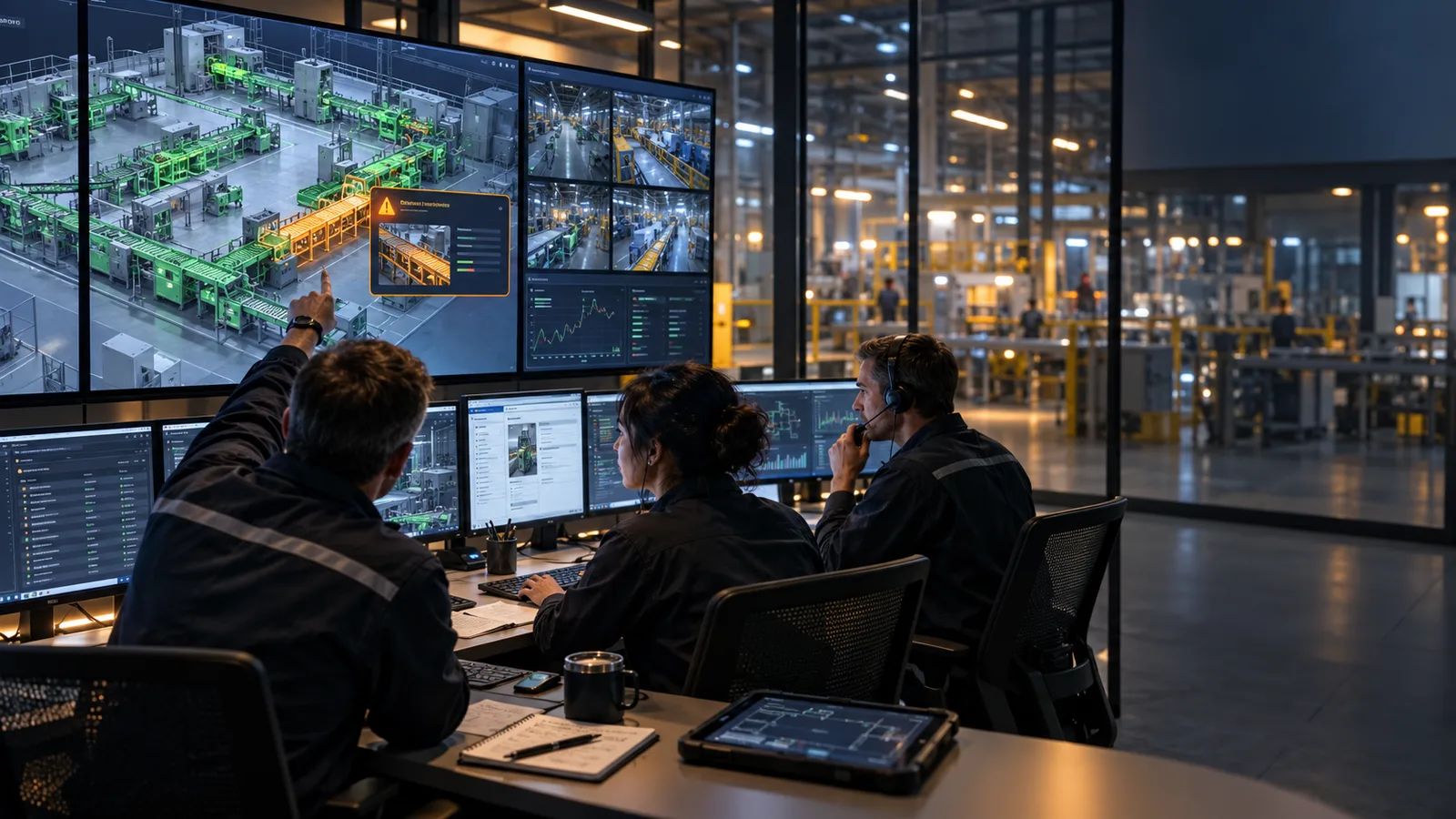
Digital twin technology provides continuous visibility across connected environments. Organisations can detect anomalies, track equipment performance, and monitor energy use as issues emerge. They no longer wait for the next scheduled inspection. Real-time monitoring through a deployed digital twin typically covers:
- Equipment performance tracking across production lines and assets.
- Anomaly detection triggered by deviation from behavioural baselines.
- Energy consumption monitoring for cost and sustainability targets.
- Production efficiency analysis that spots bottlenecks before they cause downtime.
Smart factories use real-time monitoring to watch robotics and production lines simultaneously. Logistics companies track fleets across distributed geographies. Energy providers tune grid performance in response to demand and fault signals. Smart buildings balance HVAC energy use against occupant comfort.
ICANIO has deployed real-time monitoring digital twin solutions for manufacturing clients in Australia and the USA. These projects integrated edge layer sensors with cloud analytics platforms to achieve sub-minute anomaly detection latency across production equipment fleets. For a worked example in a different domain, see our vehicular health monitoring digital twin PoC.
Predictive Maintenance with Digital Twin Technology
Predictive maintenance is often the strongest business case for an industrial digital twin deployment. AI-powered digital twins analyse historical and real-time telemetry to forecast future operating conditions. They detect early signs of equipment failure before it causes unplanned downtime. The general practice is described well in the predictive maintenance overview on Wikipedia. A mature predictive maintenance program typically covers:
- Detection of degradation patterns such as bearing wear, vibration anomalies, and thermal drift.
- Remaining useful life estimation, giving maintenance teams a probabilistic timeline for intervention.
- Schedule optimisation that replaces time-based maintenance with condition-based maintenance.
- Failure forecasting that separates high-probability events from normal variation.
The impact goes beyond reduced downtime. Equipment utilisation improves when maintenance windows shrink to what is actually needed. Component lifespan extends when degradation is caught early and operating parameters are adjusted. Labour costs fall as teams shift from reactive callouts to planned work.
For ICANIO clients in Malaysia and Germany deploying digital twin technology in industrial settings, predictive maintenance is typically the primary business case. Operational optimisation then adds further value as the platform matures. Over time, this predictive layer can feed automation, such as generating work orders directly in the CMMS.
Enterprise Use Cases by Industry
Digital twin technology applies wherever physical assets are expensive, connected, and critical. The table below summarises common patterns. Our manufacturing industry solutions page shows how this applies to factory operations.
| Industry | Common Use Cases | Primary Value |
|---|---|---|
| Manufacturing | Production optimisation, robotics, quality control | Less downtime, better yield |
| Smart buildings | HVAC, energy, occupancy analytics | Energy efficiency, comfort |
| Logistics | Fleet monitoring, routing, warehouse operations | Visibility, lower cost |
| Healthcare | Equipment tracking, patient flow | Resource utilisation |
| Energy | Grid optimisation, turbine health, demand forecasts | Reliability, renewables |
Leading Digital Twin Technology Platforms in 2026
Three enterprise platforms dominate the digital twin technology market in 2026. Each suits different deployment contexts and technical requirements.
NVIDIA Omniverse provides high-performance industrial simulation and visual AI. It suits smart factories, robotics simulation, and industrial automation where GPU-accelerated simulation is the main differentiator.
Microsoft Azure Digital Twins acts as an enterprise orchestration and data modelling platform. It suits smart buildings, infrastructure monitoring, and energy systems. Integration with the wider Microsoft ecosystem offers a low-friction path for teams already on Azure.
AWS IoT TwinMaker builds cloud-native digital twins from existing operational data and IoT telemetry. It suits logistics, remote infrastructure monitoring, and global telemetry systems where scale across distributed geographies matters most.
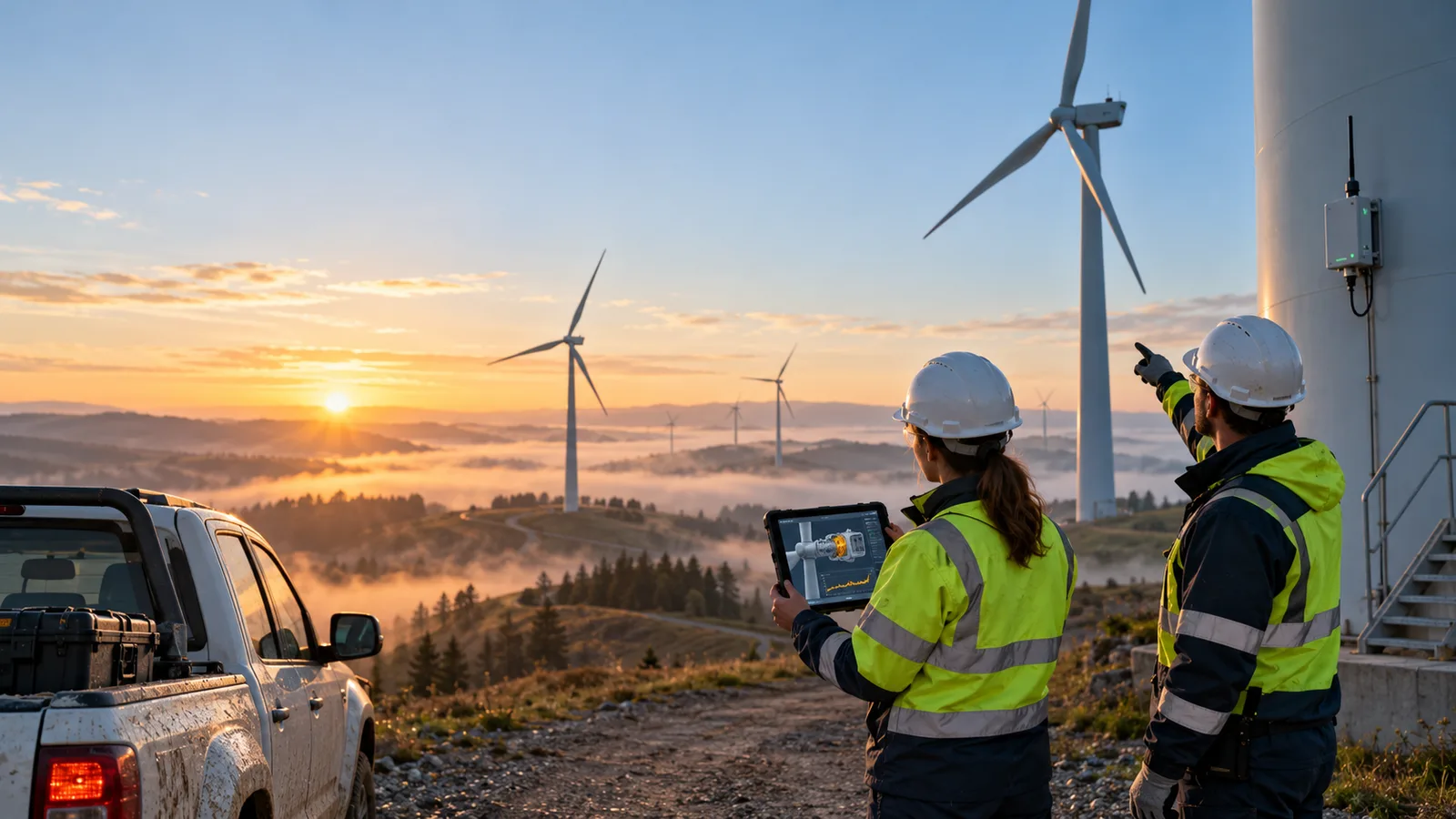
Challenges in Digital Twin Implementation
Every digital twin technology program meets obstacles. The most common ones, and how to handle them, are summarised below.
| Challenge | Root Cause | Mitigation |
|---|---|---|
| Infrastructure complexity | Legacy systems, mixed IoT protocols | Phase by asset value; translate protocols at the edge |
| Data quality | Sparse sensors, ageing equipment | Assess IoT coverage before design |
| Enterprise integration | Pre-API ERP, MES, CMMS | Integration middleware with transformation logic |
| AI model accuracy | Models drift as equipment ages | Continuous retraining on production telemetry |
| Security | OT/IT convergence | OT controls, RBAC, audit logs at every layer |
Model drift deserves special attention in digital twin technology. Equipment ages, operating conditions shift, and sensors get replaced. Our team recommends tracking model accuracy as a monitored metric, just like the equipment itself. DevOps practices such as automated deployment and versioning apply to models as much as to code.
Building a Digital Twin Business Case
Enterprise teams evaluating digital twin technology usually start with a focused pilot rather than a platform-wide rollout. The most successful programs begin with the highest-value asset or process. They prove measurable outcomes in that narrow scope. Then they use those results to justify broader investment.
For manufacturing clients in Australia and the USA, ICANIO's Digital Twin Solutions practice designs pilot architectures to scale. IoT coverage, data pipelines, and AI models are built for expansion from day one, so nothing needs rebuilding after the pilot succeeds.
Key metrics that help justify the investment to leadership include:
- Unplanned downtime as a share of total operating hours.
- Maintenance cost relative to asset replacement value, before and after.
- Mean time between failures for critical monitored equipment.
- Energy consumption reduction from operational optimisation.
For clients in Germany and the UK with sustainability reporting duties under CSRD, energy and emissions data from operational intelligence platforms can support compliance reporting. Auditors increasingly expect such efficiency outcomes alongside financial metrics.
The Future of Digital Twin Technology
The future of digital twin technology is closely tied to agentic AI, edge AI, multimodal reasoning, and real-time industrial orchestration. Future digital twin systems will increasingly self-monitor, self-optimise, and self-heal. AI agents will coordinate maintenance, production scheduling, and resource allocation with less human direction.
Today's predictive systems are precursors to autonomous maintenance. In that model, AI-identified degradation triggers work orders, parts procurement, and schedule changes through the ERP and CMMS systems already connected. ICANIO's Digital Twin Solutions practice designs systems today with the agentic AI integration points that the next generation of industrial AI will need. For a broader view, read our overview of industrial digital twin solutions.
Conclusion
Digital twin technology turns physical operations into something you can observe, question, and improve continuously. A sound seven-layer digital twin architecture, from industrial IoT sensors to security and governance, makes real-time monitoring and predictive maintenance reliable rather than experimental.
The best results come from starting small. Pick one high-value asset, prove the outcome, and scale on a design built for growth. Our team recommends treating data quality and integration as first-class work from the first day.
If you are planning a digital twin technology initiative, contact ICANIO to discuss your assets, data, and goals.
References
- Digital twin (Wikipedia)
- Predictive maintenance (Wikipedia)
- SCADA (Wikipedia)
- OPC Unified Architecture (Wikipedia)
- MQTT: The Standard for IoT Messaging
- What is Azure Digital Twins? (Microsoft Learn)
- What is AWS IoT TwinMaker? (AWS Documentation)
- NVIDIA Omniverse
Frequently asked questions
What is digital twin technology?
Digital twin technology refers to virtual replicas of physical systems synchronised in real time using industrial IoT sensors, AI, simulation systems, and operational data. Unlike static models, digital twins update continuously from live telemetry. This enables real-time monitoring, predictive maintenance, and operational optimisation across industrial and enterprise environments.
How does digital twin technology support real-time monitoring?
Digital twin technology continuously collects and analyses live telemetry from industrial IoT sensors and operational systems. Organisations can monitor equipment performance, detect anomalies, and track production efficiency the moment issues emerge, rather than during periodic inspections. This shifts operational visibility from reactive to continuous.
What is predictive maintenance in a digital twin system?
Predictive maintenance uses AI models trained on historical and real-time telemetry to forecast equipment failures before they cause unplanned downtime. Digital twin architecture provides the data infrastructure that makes predictive maintenance viable at scale. It connects sensor data, AI inference, and enterprise systems into a continuous condition monitoring environment.
Which industries use digital twin technology?
Manufacturing, healthcare, logistics, energy, smart buildings, and transportation are the main industries deploying digital twin technology. Manufacturing and energy often see the clearest returns from predictive maintenance and real-time monitoring. Smart buildings and logistics tend to benefit most from operational optimisation and resource efficiency.
What is the biggest challenge in digital twin implementation?
Data quality and industrial IoT coverage are usually the most impactful challenges. A digital twin architecture without adequate sensor coverage has blind spots that no AI layer can compensate for. Integration with legacy enterprise systems and OT security governance are the next most common blockers for enterprises starting digital twin deployments.
How long does a digital twin pilot usually take?
Timelines depend on sensor coverage, data access, and integration scope, so there is no single answer. A focused pilot on one asset with existing sensors moves much faster than one needing new hardware. Our team recommends defining clear success metrics first, then scoping the pilot around the data that already exists to shorten the path to results.