FINOPS GOVERNANCE · CLOUD RIGHTSIZING · COST VISIBILITY
Icanio’s cloud cost optimization platform helped an enterprise client cut runaway cloud spend by improving visibility, rightsizing resources, and enforcing governance across its environment.
Quick Answer
What Is a Cloud Cost Optimization Platform?
A cloud cost optimization platform improves visibility into cloud spend, rightsizes underutilized resources, and enforces governance to replace reactive billing management with proactive, predictable cost control. ICANIO built this cloud cost optimization platform around tagging standards and periodic cost reviews, cutting monthly infrastructure costs by 15-25% with zero disruption to production services.
Executive Summary
Turning Reactive Cloud Billing Into Proactive FinOps Governance
The organization faced rising cloud costs, limited visibility, and inefficient governance, causing overspending, idle resources, and reactive billing management. ICANIO’s partner was facing exactly that gap: rising monthly cloud bills increasing overall financial inefficiency, limited visibility into costs across resources and services, over-provisioned virtual machines wasting unnecessary compute resources, and idle disks, snapshots, and network components quietly consuming costs.
ICANIO addressed this by implementing a structured cloud cost optimization framework rather than a one-time cost cleanup. The objective was to perform a detailed cost and usage analysis for a spend baseline, rightsize underutilized compute resources, safely remove unused and orphaned infrastructure, optimize non-production environments, implement tagging standards for ownership and accountability, and establish periodic cost monitoring and review processes for lasting governance.
The result was a 15-25% reduction in monthly infrastructure costs with zero disruption to production services, alongside improved cost transparency, enhanced financial planning accuracy, a strong FinOps governance framework, and increased team ownership accountability.
“A cloud bill that only gets reviewed once it becomes a surprise is not being managed, it is being tolerated.”
The Challenge
Five Drivers of Runaway Cloud Spend
The organization faced rising cloud costs, limited visibility, and inefficient governance, causing overspending, idle resources, and reactive billing management.
The Cloud Cost Optimization Platform Gap
Rising monthly cloud bills increased overall financial inefficiency, eating into budget that could have funded other priorities.
Limited Cost Visibility
Limited visibility into costs across resources and services left finance and engineering guessing at where the money was actually going.
Wasted Spend From Idle and Over-Provisioned Resources
Over-provisioned virtual machines wasted unnecessary compute resources, and idle disks, snapshots, and network components quietly consumed costs on top of that.
No Tagging Standards Blurred Ownership
No tagging standards caused poor ownership and cost allocation, so no one was clearly accountable for any given resource’s spend.
Why This Cloud Cost Optimization Platform Was Needed
Reactive cost monitoring delayed optimization and financial planning, leaving the team responding to bills instead of anticipating them.
Cloud Cost Optimization Platform Solutions Provided
A Six-Part Cloud Cost Optimization Platform
Icanio implemented a structured cloud cost optimization framework, improving visibility, rightsizing resources, enforcing governance, and establishing scalable monitoring processes. The solutions included:
The Cloud Cost Optimization Platform Baseline
A detailed cost and usage analysis established a baseline spend, giving the team a clear starting point for every optimization decision.
Rightsized Compute Resources
Underutilized compute resources were rightsized to optimize cloud efficiency, cutting spend without touching production performance.
Removed Orphaned Infrastructure
Unused and orphaned infrastructure components were removed safely and effectively, closing off spend that had nothing running behind it.
Optimized Non-Production Environments
Non-production environments were optimized to lower unnecessary expenses, since dev and test workloads don’t need production-grade sizing.
Tagging Standards for Accountability
Tagging standards were implemented for ownership, tracking, and accountability, so every resource has a clear owner responsible for its cost.
This Cloud Cost Optimization Platform's Review Cycle
Periodic cost monitoring and review processes were established for governance, turning cost control into an ongoing discipline instead of a one-time cleanup.
Business Outcomes
Measurable Results Across Savings, Visibility, and Governance
This cloud cost optimization platform delivered outcomes across every dimension of the organization’s original spend problem, converting reactive, opaque billing into a disciplined, governed FinOps practice.
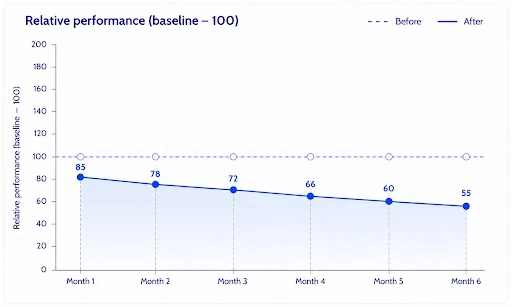
Cloud cost optimization platform results: a 15-25% reduction in monthly infrastructure costs with zero production disruption and stronger FinOps governance.
15-25% Reduction
Monthly infrastructure costs
Improved
Cloud cost transparency
Zero
Production service disruption
Enhanced
Financial planning accuracy
Strong
FinOps governance framework
Increased
Team ownership accountability
Key learnings
What This Engagement Proves for Cloud Cost Governance
Rightsizing Only Sticks With Tagging Behind It
Rightsizing compute resources once would have saved money temporarily, but without tagging standards for ownership and accountability, waste would have crept back in. Pairing rightsizing with clear ownership is what made the savings durable.
Periodic Reviews Beat One-Time Cleanups
A single round of removing unused and orphaned infrastructure fixes the past, not the future. Establishing periodic cost monitoring and review processes is what turned this engagement into ongoing FinOps governance rather than a one-off cleanup.
This Cloud Cost Optimization Platform Avoids Production Risk
Rightsizing, tagging, and removing orphaned infrastructure all happened with zero disruption to production services, proving that cloud cost optimization and production stability are not a trade-off when the work is done carefully.
Conclusion
From Reactive Billing to Governed Cloud Spend
Reactive cost monitoring might have been tolerable when cloud spend was small, but for an organization facing rising bills across many resources and services, it had become a real drain on financial efficiency. This engagement demonstrates that a single cloud cost optimization platform can resolve visibility, waste, and governance gaps within one structured programme rather than three separate initiatives.
By performing a baseline cost and usage analysis, rightsizing compute resources, implementing tagging standards, and establishing periodic cost reviews, ICANIO helped this partner cut monthly infrastructure costs by 15-25% with zero disruption to production services. The FinOps governance framework, cloud resource rightsizing, and proactive cloud cost monitoring delivered through this engagement are the foundation every future cost decision this organization makes will run on.
Related Resources
Our team runs FinOps work like this cloud cost optimization platform through ICANIO's DevOps and cloud engineering services. Cost reviews there sit alongside infrastructure automation and monitoring. Tagging and review habits also help software development teams see what their environments cost. Ongoing monitoring can continue under our support engineering services. To review your own cloud spend, contact ICANIO.
- DevOps and Cloud Engineering Services
- Industries We Serve
- JIRA Data Center AWS: Save 50%, Boost Uptime
- Best Infrastructure Monitoring Platform: 99.9% Uptime
- Top 5 Best FinOps AI Workload Cost Wins
- Top 5 Proven Kubernetes Cost Optimization Wins
References
- What is FinOps?: the FinOps Foundation's definition of cloud financial management.
- FinOps Framework: the FinOps Foundation's model of principles, capabilities and maturity.
- NIST SP 800-145: The NIST Definition of Cloud Computing: the standard definition of cloud service and deployment models.
- Cloud computing: overview of cloud computing concepts, including metered, on-demand resources.
Frequently asked questions
Common Questions About This Cloud Cost Optimization Platform
What is a cloud cost optimization platform and why use one?
A cloud cost optimization platform improves visibility into cloud spend and enforces governance through rightsizing and tagging, replacing reactive billing management that only responds to costs after they've already been incurred.
How does rightsizing reduce spend without hurting performance?
Cloud resource rightsizing matches compute capacity to actual usage patterns, cutting the cost of over-provisioned virtual machines while leaving genuinely needed performance untouched.
Why do cost allocation tagging standards matter for governance?
Cost allocation tagging standards give every resource a clear owner, replacing the poor ownership and cost allocation that made it impossible to hold any team accountable for its own spend.
How does removing orphaned infrastructure lower costs safely?
Removing unused and orphaned infrastructure components safely eliminates idle disks, snapshots, and network components that were consuming costs without supporting any active workload.
How does proactive cloud cost monitoring beat reactive billing?
Proactive cloud cost monitoring, through periodic review processes, lets teams catch and correct cost drivers before they show up as a surprise on the monthly bill, instead of reacting after the fact.
How much can this platform reduce monthly infrastructure costs?
This cloud cost optimization platform reduced monthly infrastructure costs by 15-25% while maintaining zero disruption to production services.