CONTRACT MANAGEMENT · MICROSOFT POWER PLATFORM · APPROVAL AUTOMATION
Icanio built a contract lifecycle management system for a global mining and manufacturing leader, replacing manual documentation and fragmented note-taking with a unified digital workflow.
Quick Answer
What is a Contract Lifecycle Management System?
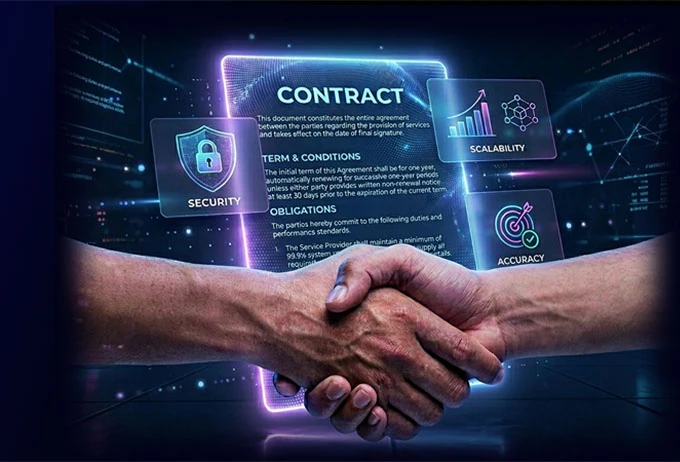
A contract lifecycle management system centralizes contract creation, approval, e-signature, and monitoring into one digital workflow, replacing manual documentation and fragmented note-taking. ICANIO built this contract lifecycle management system on the Microsoft Power Platform for a global mining and manufacturing leader, achieving a 100% standardized workflow across departments and eliminating approval bottlenecks entirely.
Executive Summary
Turning Manual Contract Paperwork Into a Digital Workflow
Manual documentation and fragmented note-taking might work for a handful of contracts, but they become a genuine liability once a manufacturing enterprise is managing high-value agreements across departments. ICANIO’s partner was facing exactly that risk: delayed approval cycles from manually routing documents across departments, reduced productivity from time-consuming physical paperwork, no centralized digital repository for legal and operational agreements, and inconsistent accountability in the review process between stakeholders.
ICANIO addressed this by architecting a Unified Digital Contract Lifecycle Management System rather than digitizing individual steps in isolation. The objective was to deploy a centralized digital repository, integrate 3-level automated approval workflows for HOD, MAD, and stakeholders, add electronic signature integration, and build interactive dashboards for real-time contract monitoring, all on Power Apps and SharePoint with Microsoft Graph API and Azure AD for identity management. The result was a 100% standardized workflow across all departments and zero approval bottlenecks.
Every one of those outcomes traces back to the same design decision: routing every contract through the same automated, auditable workflow instead of leaving each department to manage approvals through its own manual process.
“A contract sitting in someone’s inbox waiting for a signature is not a paperwork delay, it is a business risk with a dollar value attached to every day it waits.”
The Challenge
Five Risks of Manual Contract Management at Scale
A manufacturing company faced significant operational inefficiencies due to the absence of a structured contract management workflow. Relying on manual documentation and fragmented note-taking led to critical business risks.
Delayed Manual Approval Cycles
Delayed approval cycles due to manual routing of documents across departments meant high-value contracts sat waiting at every handoff.
Reduced Productivity From Physical Paperwork
Reduced overall productivity caused by time-consuming physical paperwork pulled staff time away from higher-value work.
No Repository in This Contract Lifecycle Management System
The lack of a centralized digital repository for legal and operational agreements left contracts scattered across departments with no single system of record.
Accountability in This Contract Lifecycle Management System
Inconsistent accountability in the review process between various stakeholders made it unclear who was responsible for a contract at any given stage.
Bottlenecks Before This Contract Lifecycle Management System
Fragmented communication led to bottlenecks in high-value contract execution, slowing down exactly the agreements that mattered most.
Contract Lifecycle Management System Solutions Provided
A Six-Part Unified Digital Contract Lifecycle Management System
Icanio Technologies architected a Unified Digital Contract Lifecycle Management (CLM) System, leveraging the Microsoft Power Platform to automate governance and enhance transparency. The solutions included:
Centralized Digital Contract Repository
Deployed a centralized digital repository to manage the entire contract lifecycle, replacing scattered physical and digital files with one system of record.
3-Level Approval Automation
Integrated 3-level approval automation for HOD, MAD, and stakeholders, routing every contract through the same defined, auditable sequence.
Interactive Contract Health Dashboards
Built interactive dashboards for real-time monitoring of contract health and alerts, replacing manual status check-ins with live visibility.
E-Signatures in This Contract Lifecycle Management System
Implemented electronic signature integration to eliminate physical document delays, removing the last manual step in the approval chain.
Task Tracking in This Contract Lifecycle Management System
Developed task and workflow tracking to improve cross-departmental accountability, making it clear who owned each stage of a contract.
Power Apps SharePoint Foundation
Utilized a Power Apps SharePoint foundation for a secure, enterprise-grade file repository, giving the system a scalable Microsoft-native base.
Business Outcomes
Measurable Results Across Standardization, Speed, and Governance
This contract lifecycle management system delivered outcomes across every dimension of the manufacturer’s original governance gap, converting a manual, fragmented contract process into a standardized digital workflow with zero approval bottlenecks.
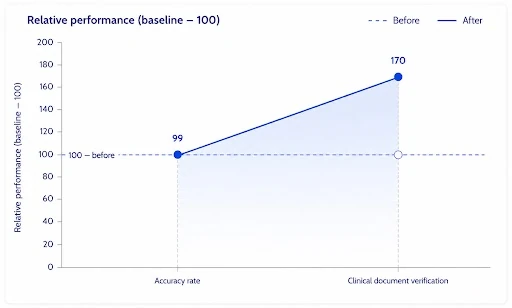
Contract lifecycle management system outcomes: a fully standardized workflow, zero approval bottlenecks and real-time tracking of contract usage and renewals.
100%Standardized Workflow
Establishing a unified, consistent contract lifecycle process across departments
Zero Approval Bottlenecks
Via structured 3-level automation ensuring 24/7 accountability and compliance
Real-Time Utilization Tracking
Providing live insights into contract usage, renewal schedules, and status
Paperless Digital Governance
Eliminating manual documentation and reducing physical storage overhead
Enhanced Proactive Decision-Making
Leveraging live dashboards and automated alerts for expiring agreements
Seamless Enterprise Integration
Utilizing Microsoft Graph API and Azure AD for secure identity management
Key learnings
What This Engagement Proves for Digitizing Legal Workflows
This Contract Lifecycle Management System Ends Bottlenecks
Automating approval routing would not have eliminated bottlenecks on its own if each department still followed its own process. Standardizing the workflow to 100% consistency across departments, then automating it, is what actually achieved zero approval bottlenecks.
E-Signatures Only Help if the Whole Chain Is Digital
Adding electronic signature integration to an otherwise manual process would have just moved the bottleneck to a different step. Digitizing the repository, approval routing, and signatures together is what removed delay from the entire chain, not just one link in it.
This Contract Lifecycle Management System Shows Ownership
Inconsistent accountability was a visibility problem as much as a speed problem. Task and workflow tracking that makes ownership visible at every stage is what resolved the accountability gap that faster routing alone could not fix.
Conclusion
From Manual Contract Chaos to a Standardized Digital Workflow
Manual documentation and fragmented note-taking might have been sufficient for a handful of contracts, but for a global mining and manufacturing leader managing high-value agreements across departments, it had become a real operational and business risk. This engagement demonstrates that a single contract lifecycle management system can resolve speed, accountability, and governance gaps within one structured programme rather than three separate initiatives.
By centralizing the contract repository, automating 3-level approval workflows, integrating electronic signatures, and building real-time dashboards on Power Apps and SharePoint, ICANIO helped this partner achieve a 100% standardized workflow and eliminate approval bottlenecks entirely. The centralized repository, automated approval routing, and enterprise identity integration delivered through this engagement are the foundation every future contract this organization manages will run on.
Related Resources
This contract lifecycle management system reflects ICANIO's software development work. It also fits our workflow automation practice. Our team builds approval and governance platforms through application development services. Manufacturers can explore our manufacturing industry solutions. We also offer cloud engineering for Microsoft-based business systems. Read our guide to document approval system workflows. To discuss a similar system, contact ICANIO.
- Application Development Services
- Manufacturing Industry Solutions
- Manufacturing Digital Transformation: 60% Boost
- Document Approval System: Enterprise Workflow
References
- Contract management: Wikipedia overview of managing contracts from creation to renewal.
- Electronic signature: Wikipedia overview of legally recognised digital signing.
- Microsoft Power Platform documentation: Official guide to Power Apps and related low-code tools.
- Microsoft Graph overview: Microsoft documentation for the unified Microsoft 365 API.
Frequently asked questions
Common Questions About This Contract Lifecycle Management System
Why does a manufacturer need a contract lifecycle management system?
A contract lifecycle management system centralizes contract creation, approval, signature, and monitoring into one digital workflow. A manufacturer needs one because manual documentation and fragmented note-taking cannot scale to high-value, cross-departmental agreements without creating delay and risk.
How do 3-level approval workflows reduce approval bottlenecks?
3-level automated approval workflows route every contract through the same defined sequence for HOD, MAD, and stakeholders, replacing the ad hoc manual routing that previously caused inconsistent delays.
Why does electronic signature integration matter beyond convenience?
Electronic signature integration removes the last manual step in an otherwise digital approval chain, since a fully digital workflow that still requires a physical signature just moves the bottleneck to that final step.
How does a centralized repository improve contract governance?
A centralized digital repository gives the organization one system of record for every contract, replacing the scattered physical and digital files that previously made agreements hard to locate and audit.
What role do Microsoft Graph API and Azure AD play in this system?
A Microsoft Graph API Azure AD integration provides secure, unified identity management across the platform, ensuring only authorized stakeholders can access, review, or approve a given contract.
How do real-time dashboards support proactive decisions?
Interactive dashboards and automated alerts surface contract health, usage, and renewal timelines as they change, letting managers act on expiring agreements proactively instead of discovering them after the fact.