PUBLIC SANITATION PLATFORM · DATA DIGITIZATION · NGO REPORTING TOOLS
Icanio’s WashLab platform brings sanitation data management out of spreadsheets and into a centralized, standardized system for tracking public toilet conditions.
Quick Answer
What Is a Sanitation Data Management Platform?
A sanitation data management platform digitizes toilet condition surveys, centralizes facility records, and gives planners a single source of visibility to replace fragmented spreadsheets. ICANIO built this sanitation data management platform for WashLab, cutting survey processing time by 40% and improving access to historic data threefold for planners and sanitation stakeholders.
Executive Summary
Turning Toilet Data From Spreadsheets Into a System
Organizations managing public sanitation lacked a unified digital platform to monitor toilet conditions, leaving data collection fragmented across manual surveys and spreadsheets. Without standardized forms, field data collection was inconsistent from site to site, making it difficult to track toilet condition trends over time. Planners and sanitation stakeholders had limited visibility into facility performance, and manual consolidation delayed the insights needed to plan sanitation improvement programs.
ICANIO addressed this with WashLab, a public toilet monitoring platform built around sanitation survey digitization from the ground up. The team built a secure web platform with standardized survey forms, role-based access, a centralized repository of searchable toilet assets, and an analytics-ready data model supporting dashboards and exportable datasets for planners and NGOs.
The result was a single source of centralized data visibility, 40% faster survey data processing, and threefold-improved access to historic data, replacing manual consolidation with a scalable sanitation data management system built to extend to future projects.
“You cannot plan a sanitation improvement program around data that takes weeks to consolidate from scattered spreadsheets.”
The Challenge
Five Barriers to Reliable Sanitation Data
Organizations managing public sanitation lacked a unified digital platform to monitor toilet conditions, resulting in fragmented data collection, inconsistent surveys, and limited visibility into facility performance.
The Sanitation Data Management Gap
Manual surveys and spreadsheets, with no standardized forms, slowed toilet data collection and left field data inconsistent from site to site.
Fragmented Monitoring Tools
Fragmented tools prevented consistent sanitation monitoring across locations, leaving planners without one system they could rely on.
No Visibility Into Condition Trends
Without a consistent data trail, it was difficult to track toilet condition trends over time or flag facilities that needed attention.
Limited Visibility for Planners and Stakeholders
Limited data visibility left planners and sanitation stakeholders working from an incomplete picture of facility performance.
Manual Consolidation Delayed Insights
Manual consolidation of scattered records delayed the insights that sanitation improvement programs needed in order to act.
Sanitation Data Management Solutions Provided
A Six-Part WashLab Sanitation Data Platform
Icanio Technologies developed the WashLab platform to digitize toilet data collection, standardize field surveys, centralize sanitation records, and enable scalable monitoring and reporting across public sanitation facilities. The solutions included:
The Sanitation Data Management Platform
Built a secure web platform for managing public toilet data and assessments in one place instead of scattered spreadsheets.
Standardized Survey Forms
Standardized survey forms ensure consistent sanitation data collection across every field team and location.
Role-Based Access Control
Role-based access enables secure and organized user management, so field surveyors, program managers, and planners each see the right level of detail.
Centralized Toilet Asset Records
A centralized repository stores searchable centralized toilet asset records and survey history, replacing scattered files with one source of truth.
Analytics-Ready Data Model
An analytics-ready data model supports dashboards and sanitation reporting from day one, with no rework needed to make the data usable.
Exportable Datasets for NGO Partners
Exportable datasets enable deeper analysis for planners and NGOs, extending NGO sanitation reporting beyond the platform itself.
Business Outcomes
Measurable Results Across Visibility, Speed, and Scale
WashLab delivered outcomes across every dimension of the sanitation data problem, from raw collection speed to long-term planning visibility.
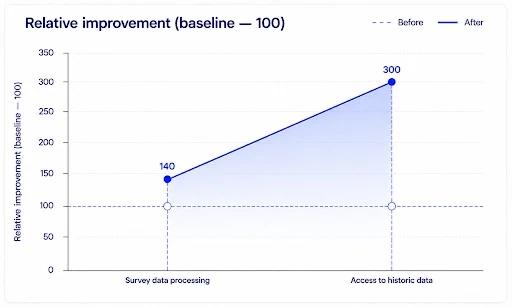
Sanitation data management outcomes: one centralized data source, 40% faster survey data processing and three times better access to historic data.
Single centralized source
Data visibility
40%faster
Survey data processing
3ximproved
Access to historic data
Efficient workflows
Manual consolidation
Better decisions
Planning insights
Scalable platform
Future projects
Key learnings
Lessons for Modernizing NGO Field Data Collection
Standardization Beats Ad Hoc Data Collection
Replacing free-form surveys with standardized forms did more to fix inconsistent sanitation data management than any dashboard could, because clean data starts at the point of collection.
Role-Based Access Keeps Shared Data Trustworthy
Giving field surveyors, program managers, and planners different levels of access let WashLab centralize sanitation records without compromising data integrity.
Analytics-Ready From Day One Saves Rework
Building an analytics-ready data model from the start meant WashLab could support dashboards and exportable datasets immediately, instead of retrofitting reporting onto raw survey data later.
Conclusion
From Scattered Spreadsheets to a Sanitation Data System
A patchwork of manual surveys and spreadsheets might get by when an organization is tracking a handful of facilities, but it collapses once sanitation monitoring needs to scale across regions. This engagement shows that a single public toilet monitoring platform, built around standardized forms and role-based access, can resolve collection, visibility, and reporting gaps within one system rather than three separate fixes.
By building WashLab as a secure web platform with a centralized, searchable repository and an analytics-ready data model, ICANIO gave planners a single source of centralized data visibility, cut survey data processing time by 40%, and improved access to historic data threefold. The standardized forms, role-based access, and exportable datasets delivered through this sanitation survey digitization effort are the foundation any future sanitation project on this platform will run on.
Related Resources
This sanitation data management platform reflects ICANIO's software development and data engineering work. Our team builds survey and records platforms through application development services. Reporting and analytics needs fit our data and artificial intelligence services. We also offer cloud and automation support for growing field programmes. Public-sector and NGO teams can browse our industry solutions. To discuss a similar platform, contact ICANIO.
- Application Development Services
- Industry Solutions
- Healthcare Record Digitization: 4x Faster
- Top 5 Best MVP Development Enterprise Scaling Wins
References
- Sanitation fact sheet: WHO overview of global sanitation needs and health impact.
- Sustainable Development Goal 6: UN goal for clean water and sanitation for all.
- WHO/UNICEF Joint Monitoring Programme: Global data on water, sanitation and hygiene coverage.
- Role-based access control: Wikipedia overview of permission models based on user roles.
Frequently asked questions
Common Questions About Sanitation Data Management
What is a sanitation data management platform?
A sanitation data management platform digitizes toilet condition surveys, centralizes facility records, and gives planners a single source of visibility instead of fragmented spreadsheets and manual consolidation.
Why replace spreadsheets with standardized survey forms?
Standardized survey forms ensure sanitation data management stays consistent whether a field team is assessing one facility or hundreds across a region, which spreadsheets alone cannot guarantee.
How does role-based access protect sanitation records?
Role-based access lets field surveyors, program managers, and planning stakeholders interact with the same toilet asset records at the right level of detail, without compromising data integrity.
What does an analytics-ready data model enable?
An analytics-ready data model means survey data supports dashboards and sanitation reporting immediately, with exportable datasets available for deeper analysis by planners and NGO partners.
How much faster is survey data processing with WashLab?
WashLab cut survey data processing time by 40%, replacing manual consolidation with a centralized platform that gives planners immediate access to current and historic records.
Can a sanitation data management platform scale to new projects?
Yes. WashLab was built as a scalable platform, so the same standardized forms, role-based access, and analytics-ready data model can extend to new facilities and future sanitation projects without a rebuild.